THE SILK ROAD
Frontiers of the Middle Empire
Follow in the footsteps of the Silk Road, from Xiahe to Kashgar, and discover a multifaceted China shaped by legendary sites—such as the Mogao Caves and the bustling bazaars of Kashgar—and by authentic encounters with Uyghur families and local artisans.
From the ecology of the vast steppes to the ancestral crafts of silk-making and carved wood, this singular journey weaves together cultures, landscapes, and human stories. It is an experience designed for those who seek to understand, to feel, and to truly connect through shared moments and living traditions.
Day 1 Lanzhou
Arrival in Lanzhou, a major trading hub for over 2,000 years and a key gateway on the Silk Road linking Chang’an (Xi’an) to Central Asia via Dunhuang. Walk along the Yellow River, lined with statues, fountains, and viewpoints overlooking the surrounding hills. Dinner featuring the local specialty: Lanzhou Lamian, hand-pulled noodles served in a spicy beef broth.
Arrival in Lanzhou, a major trading hub for over 2,000 years and a key gateway on the Silk Road linking Chang’an (Xi’an) to Central Asia via Dunhuang. Walk along the Yellow River, lined with statues, fountains, and viewpoints overlooking the surrounding hills. Dinner featuring the local specialty: Lanzhou Lamian, hand-pulled noodles served in a spicy beef broth.
Day 2 Lanzhou → Binglingsi Grottoes → Xiahe (3,000 m altitude | 265 km / approx. 5 hrs)
Cross the Yellow River at the Liujiaxia Dam, admiring the characteristic loess plateau landscape with its copper-colored river and yellowish cliffs. Visit the Binglingsi Grottoes (UNESCO), the “Thousand Buddha Caves,” carved into cliff faces along the Yellow River between the 5th and 12th centuries. This exceptional site bears witness to Chinese religious art and the influence of the Silk Road, combining historical depth, artistic beauty, and spectacular natural scenery. Continue to Xiahe, a serene Tibetan monastic town seemingly frozen in time.
Cross the Yellow River at the Liujiaxia Dam, admiring the characteristic loess plateau landscape with its copper-colored river and yellowish cliffs. Visit the Binglingsi Grottoes (UNESCO), the “Thousand Buddha Caves,” carved into cliff faces along the Yellow River between the 5th and 12th centuries. This exceptional site bears witness to Chinese religious art and the influence of the Silk Road, combining historical depth, artistic beauty, and spectacular natural scenery. Continue to Xiahe, a serene Tibetan monastic town seemingly frozen in time.
Day 3 Xiahe → Linxia → Lanzhou (160 km / approx. 2 hrs 50 min)
Day dedicated to exploring Xiahe. Visit Labrang Monastery, founded in 1709 by the first Jamyang Zhepa, one of the six great Gelugpa (Yellow Hat) monasteries and the most important in eastern Tibet. It still houses several hundred monks and colleges of philosophy, astrology, and Tibetan medicine. Visit Gongtang Pagoda, crowned with a monumental golden chörten. Discover the historic “Eight Quarters and Thirteen Streets,” a well-preserved district traditionally inhabited by Hui Muslims, illustrating the harmonious coexistence of Han, Hui, and Tibetan cultures. Return to Lanzhou by road.Day 4 Lanzhou → Zhangye
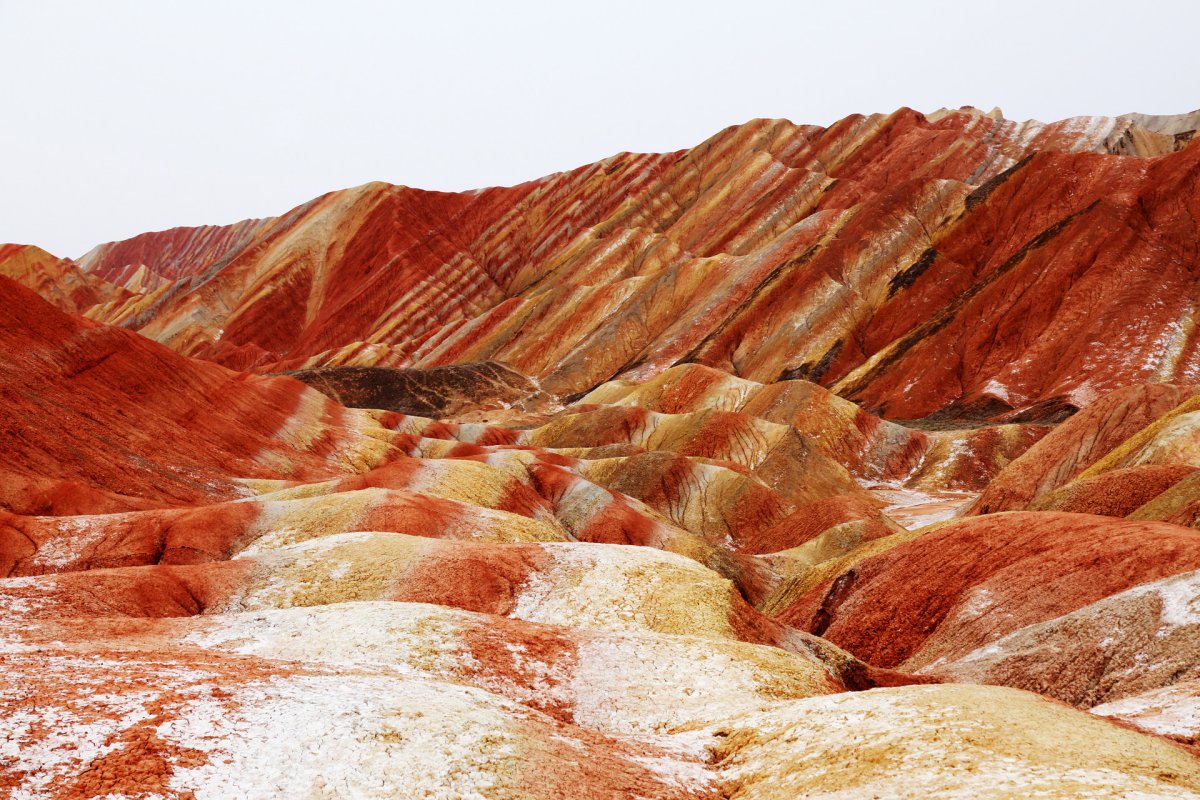
Transfer to the railway station and depart by high-speed train to Zhangye, a pleasant stop on the Silk Road. Visit the spectacular Danxia National Geopark (UNESCO), known as the “Rainbow Mountains,” formed by layers of red sandstone and minerals shaped by erosion over millions of years. Visit the Giant Buddha Temple, built in 1098, housing a 35-meter-long reclining Buddha surrounded by arhats. Visit a local primary school for an authentic glimpse into everyday life in rural China.
Transfer to the railway station and depart by high-speed train to Zhangye, a pleasant stop on the Silk Road. Visit the spectacular Danxia National Geopark (UNESCO), known as the “Rainbow Mountains,” formed by layers of red sandstone and minerals shaped by erosion over millions of years. Visit the Giant Buddha Temple, built in 1098, housing a 35-meter-long reclining Buddha surrounded by arhats. Visit a local primary school for an authentic glimpse into everyday life in rural China.
Day 5 Zhangye → Jiayuguan
Drive to Jiayuguan, a major and symbolic Silk Road outpost. Visit Jiayuguan Fortress, built in 1372 during the Ming dynasty, marking the western end of the Great Wall and the former frontier of the Chinese Empire. Visit the Overhanging Great Wall, originally built in 1539, offering sweeping views over the desert and snow-capped mountains. Visit the Wei and Jin Tombs, famous for their vivid murals depicting daily life more than 1,500 years ago.
Drive to Jiayuguan, a major and symbolic Silk Road outpost. Visit Jiayuguan Fortress, built in 1372 during the Ming dynasty, marking the western end of the Great Wall and the former frontier of the Chinese Empire. Visit the Overhanging Great Wall, originally built in 1539, offering sweeping views over the desert and snow-capped mountains. Visit the Wei and Jin Tombs, famous for their vivid murals depicting daily life more than 1,500 years ago.
Day 6 Jiayuguan → Yulin Grottoes → Dunhuang
Drive to Dunhuang, a fertile oasis on the Silk Road. En route, visit the Yulin Grottoes, hidden in a mountain valley far from tourist crowds. These 42 Buddhist caves, carved and restored between the Tang and Yuan dynasties, feature over 5,000 m² of magnificent murals and statues reflecting the blended influences of China, India, and Central Asia.Day 7 Dunhuang: Mogao Caves
Visit the Mogao Caves (UNESCO), one of the world’s greatest treasures of Buddhist art. This complex of 492 caves, carved between the 4th and 14th centuries into a sandstone cliff along the ancient Silk Road, houses extraordinary murals and sculptures. Discover the Crescent Moon Lake, nestled at the foot of towering dunes, and Mingsha Mountain, the “Singing Sand Dunes,” named for the sound produced when sand slides down its slopes. Enjoy sunset over the rolling desert dunes.
Visit the Mogao Caves (UNESCO), one of the world’s greatest treasures of Buddhist art. This complex of 492 caves, carved between the 4th and 14th centuries into a sandstone cliff along the ancient Silk Road, houses extraordinary murals and sculptures. Discover the Crescent Moon Lake, nestled at the foot of towering dunes, and Mingsha Mountain, the “Singing Sand Dunes,” named for the sound produced when sand slides down its slopes. Enjoy sunset over the rolling desert dunes.
Day 8 Dunhuang → Liuyuan → Turfan
Visit the Dunhuang Museum, displaying Tibetan and Chinese manuscripts and ritual objects found in the caves. Visit the famous Dunhuang printing workshop. Transfer to Liuyuan Station and take a high-speed train to Turfan, a legendary Silk Road oasis, cultural crossroads, and archaeological site set amid desert landscapes and vineyards. Dinner at leisure.
Visit the Dunhuang Museum, displaying Tibetan and Chinese manuscripts and ritual objects found in the caves. Visit the famous Dunhuang printing workshop. Transfer to Liuyuan Station and take a high-speed train to Turfan, a legendary Silk Road oasis, cultural crossroads, and archaeological site set amid desert landscapes and vineyards. Dinner at leisure.
Day 9 Turfan
Excursion to the ruins of Jiaohe Ancient City, one of the largest, oldest, and best-preserved earthen cities in the world. Visit the Karez Museum, showcasing the ingenious 2,000-year-old underground irrigation system that turned Turfan into a desert oasis. Visit the Grand Mosque and the Emin Minaret, a 44-meter tower built in 1777 in Afghan style. Dinner with songs and dances at a Uyghur family home—an authentic immersion into daily Uyghur life.Day 10 Turfan → Kashgar (overnight train)
Visit the Bezeklik Thousand Buddha Caves, dating from the 5th to 9th centuries, a remarkable treasure of early Buddhist art in the Flaming Mountains valley. Return to Turfan and stroll through the old town. Overnight train to Kashgar, a historic Silk Road crossroads.
Visit the Bezeklik Thousand Buddha Caves, dating from the 5th to 9th centuries, a remarkable treasure of early Buddhist art in the Flaming Mountains valley. Return to Turfan and stroll through the old town. Overnight train to Kashgar, a historic Silk Road crossroads.
Day 11 Kashgar
Breakfast picnic on board. Arrival in Kashgar and transfer to the hotel. Visit the old town with its winding alleys, earthen houses, carved balconies, and spice markets. Discover Id Kah Mosque, the largest mosque in China, built in the 15th century. Visit the Abakh Khoja Mausoleum, a masterpiece of Uyghur Islamic architecture, also known as the tomb of Xiang Fei, the “Fragrant Concubine” of Emperor Qianlong.
Breakfast picnic on board. Arrival in Kashgar and transfer to the hotel. Visit the old town with its winding alleys, earthen houses, carved balconies, and spice markets. Discover Id Kah Mosque, the largest mosque in China, built in the 15th century. Visit the Abakh Khoja Mausoleum, a masterpiece of Uyghur Islamic architecture, also known as the tomb of Xiang Fei, the “Fragrant Concubine” of Emperor Qianlong.
Day 12 Kashgar → Karakul Lake → Kashgar (3,600 m altitude | 360 km round trip)
Full-day excursion to Karakul Lake, following a scenic road dominated by the glaciers of Muztagh Ata. Admire turquoise waters, snow-capped peaks (Muztagh Ata, 7,546 m), and Kyrgyz yurts in a grand Pamir landscape. Return to Kashgar.Day 13 Kashgar → Beijing
Morning visit to the lively livestock market, where herders trade sheep, cattle, yaks, camels, and horses in animated negotiations. Visit the vast Sunday Bazaar, one of the oldest and largest markets in Central Asia. Transfer to the airport for the flight to Beijing. Overnight near the airport. Dinner at leisure
Morning visit to the lively livestock market, where herders trade sheep, cattle, yaks, camels, and horses in animated negotiations. Visit the vast Sunday Bazaar, one of the oldest and largest markets in Central Asia. Transfer to the airport for the flight to Beijing. Overnight near the airport. Dinner at leisure