
TIBET
A sacred land of high plateaus, ancient monasteries, and timeless spirituality.
Set out to discover the Roof of the World, a sacred land where majestic mountains meet millennia-old Buddhist traditions. This exceptional journey carries you across the vast Tibetan highlands, revealing legendary monasteries perched on rocky promontories, deep-blue high-altitude lakes reflecting the sky, and villages where time seems to slow. Along the way, spirituality, nature, and daily life intertwine, offering a rare immersion into a culture shaped by faith, resilience, and harmony with the land
Day 1 Chengdu
Early morning arrival in Chengdu, capital of Sichuan Province in southwest China. Renowned as one of the world’s culinary capitals recognized by UNESCO, Chengdu is famous for its relaxed lifestyle, spicy cuisine, giant pandas, and an atmosphere that is both modern and deeply rooted in tradition.
Transfer to the city center and enjoy a stroll in the Kuanzhai Alley (Kuanzhaixiangzi) area. Walk through Renmin Park (People’s Park), where locals dance, play mahjong, and sip tea. Tea tasting at the historic Heming Teahouse. Welcome dinner in the evening.
Early morning arrival in Chengdu, capital of Sichuan Province in southwest China. Renowned as one of the world’s culinary capitals recognized by UNESCO, Chengdu is famous for its relaxed lifestyle, spicy cuisine, giant pandas, and an atmosphere that is both modern and deeply rooted in tradition.
Transfer to the city center and enjoy a stroll in the Kuanzhai Alley (Kuanzhaixiangzi) area. Walk through Renmin Park (People’s Park), where locals dance, play mahjong, and sip tea. Tea tasting at the historic Heming Teahouse. Welcome dinner in the evening.
Day 2 Chengdu → Leshan → Chengdu
Full-day excursion to visit the Giant Leshan Buddha (UNESCO), a colossal statue of Maitreya carved into a red sandstone cliff at the confluence of the Min, Dadu, and Qingyi rivers. Boat cruise offering a close view of the Buddha. Return to Chengdu with a stop at Huanglongxi, a picturesque riverside town over 1,700 years old. Wander through its cobbled streets, traditional houses, ancient temples, and enjoy its peaceful atmosphere.
Full-day excursion to visit the Giant Leshan Buddha (UNESCO), a colossal statue of Maitreya carved into a red sandstone cliff at the confluence of the Min, Dadu, and Qingyi rivers. Boat cruise offering a close view of the Buddha. Return to Chengdu with a stop at Huanglongxi, a picturesque riverside town over 1,700 years old. Wander through its cobbled streets, traditional houses, ancient temples, and enjoy its peaceful atmosphere.
Day 3 Chengdu → Lhasa (3,650 m altitude)
Morning flight to Lhasa, the sacred city and spiritual heart of Tibet, perched at 3,650 meters above sea level. In the afternoon, visit Canggu Temple, a nunnery founded by disciples of Tsongkhapa and one of the few monasteries for nuns in Lhasa, offering insight into religious life and female Buddhist communities. Transfer to the hotel and rest. (We recommend drinking plenty of water to help acclimatize to the high altitude.)Day 4 Lhasa
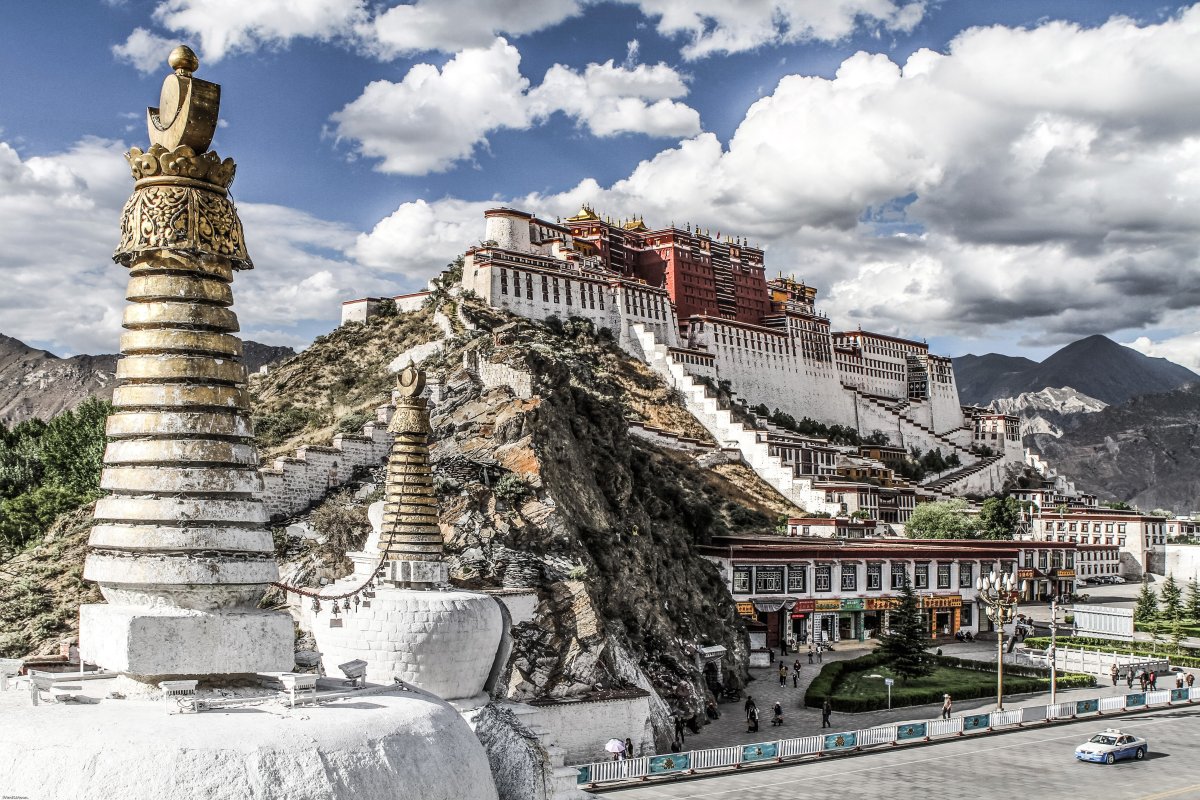
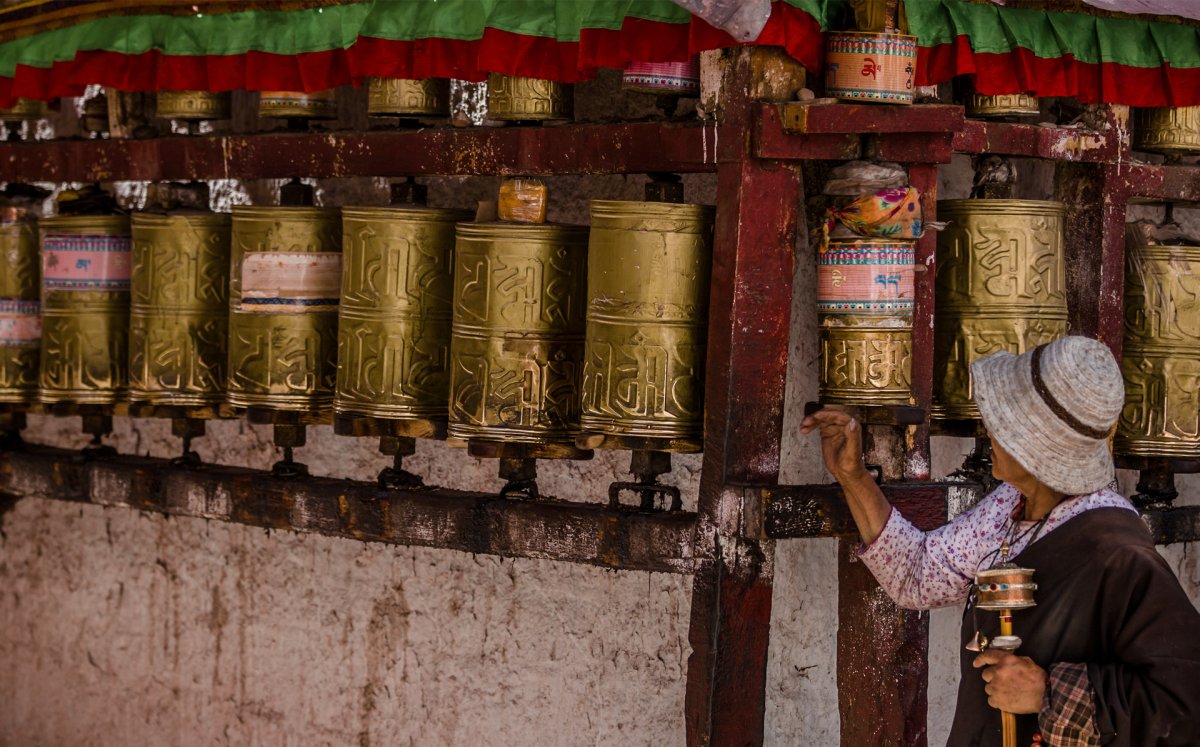
Visit the Potala Palace (UNESCO), the monumental palace-fortress dominating Lhasa, rising 178 meters high with 13 gilded-roof stories. Built in 637 by King Songtsen Gampo, it served as the residence of successive Dalai Lamas until 1959. Visit the Jokhang Temple (UNESCO), the spiritual center of Tibetan Buddhism and its most sacred site, constantly visited by pilgrims. Walk along Barkhor Street, a vibrant circumambulation route lined with shops selling local products.
Visit the Potala Palace (UNESCO), the monumental palace-fortress dominating Lhasa, rising 178 meters high with 13 gilded-roof stories. Built in 637 by King Songtsen Gampo, it served as the residence of successive Dalai Lamas until 1959. Visit the Jokhang Temple (UNESCO), the spiritual center of Tibetan Buddhism and its most sacred site, constantly visited by pilgrims. Walk along Barkhor Street, a vibrant circumambulation route lined with shops selling local products.
Day 5 Lhasa
Visit Chakpori Monastery, built in the 7th century on Yaowang Mountain, offering a magnificent panoramic view of the Potala Palace. Visit Norbulingka (UNESCO), the former summer residence of the Dalai Lamas. In the afternoon, visit Sera Monastery, one of the three great Gelugpa monastic universities, where you will witness the famous daily philosophical debates among monks.
Visit Chakpori Monastery, built in the 7th century on Yaowang Mountain, offering a magnificent panoramic view of the Potala Palace. Visit Norbulingka (UNESCO), the former summer residence of the Dalai Lamas. In the afternoon, visit Sera Monastery, one of the three great Gelugpa monastic universities, where you will witness the famous daily philosophical debates among monks.
Day 6 Lhasa → Yamdrok Lake → Gyantse (267 km / approx. 5 hrs)
Travel through breathtaking landscapes of turquoise lakes, snow-capped peaks, red and ochre mountains, and deep valleys. Cross Kamba-la Pass (4,796 m) for stunning views of Yamdrok Lake (4,441 m), one of Tibet’s three sacred lakes and an important habitat for migratory birds. Stop at Garola Glacier, one of the glaciers closest to subtropical forest zones on the Tibetan Plateau. Visit a village workshop to learn about traditional tsampa (roasted barley flour) production. Visit Pelkor Chöde Monastery and admire the magnificent Gyantse Kumbum, the largest chorten in Tibet. Arrival in Gyantse.Day 7 Gyantse → Shigatse → Sakya (245 km / approx. 4 hrs 40 min)
Drive to Shigatse (3,880 m), Tibet’s second-largest city. Stop at a village where houses are insulated with dried yak dung, an eco-friendly traditional practice.
Visit Tashilhunpo Monastery, seat of the Panchen Lama and one of the most important monasteries in Tibet. Continue to Sakya and visit Sakya Monastery, the original seat of the Sakya school of Tibetan Buddhism.
Drive to Shigatse (3,880 m), Tibet’s second-largest city. Stop at a village where houses are insulated with dried yak dung, an eco-friendly traditional practice.
Visit Tashilhunpo Monastery, seat of the Panchen Lama and one of the most important monasteries in Tibet. Continue to Sakya and visit Sakya Monastery, the original seat of the Sakya school of Tibetan Buddhism.
Day 8 Sakya → Shegar → Rongbuk / Everest Base Camp (238 km / approx. 4 hrs | 5,050 m altitude)
Journey toward Everest Base Camp. After passing Shegar (4,300 m), cross Jiawu La Pass (5,210 m), offering one of the most spectacular panoramic views of five Himalayan peaks over 8,000 meters: Makalu, Lhotse, Everest, Nuptse, and Cho Oyu. Continue to Rongbuk, 8 km from the Tibetan-side Everest Base Camp. If weather permits, admire sunset over Mount Everest (Qomolangma).
Journey toward Everest Base Camp. After passing Shegar (4,300 m), cross Jiawu La Pass (5,210 m), offering one of the most spectacular panoramic views of five Himalayan peaks over 8,000 meters: Makalu, Lhotse, Everest, Nuptse, and Cho Oyu. Continue to Rongbuk, 8 km from the Tibetan-side Everest Base Camp. If weather permits, admire sunset over Mount Everest (Qomolangma).
Day 9 Rongbuk → Shegar → Shigatse
In the morning, weather permitting, enjoy a breathtaking sunrise over Mount Everest (Qomolangma). The day begins with a visit to Rongbuk Monastery, perched at approximately 4,980 meters above sea level and considered one of the highest monasteries in the world. We then travel along the Everest route, passing through the traditional village of Zhaxi Dzong, where you will discover authentic Tibetan rural life and culture before reaching Jiawula Pass. The highlight of the day awaits at the enigmatic site known as “Everest 72 Turns”, where legends and dramatic Himalayan landscapes merge, offering an unforgettable experience in the heart of the Himalayas.Day 10 Shigatse → Yangbajing → Dangxiong (355 km / approx. 5 hrs – up to 5,600 m altitude)
Morning drive to Yungdrung Ling Monastery, founded in 1834 by Nangton Lawa Gyeltsen. It is one of the most important monasteries and a major spiritual center of the Bön religion in Tibet. The journey continues toward the imposing Mount Qiongmugangri (7,048 m). A short walk leads to the Five-Colored Lake at the foot of the mountain, a sacred site revered by Buddhists, Hindus, Jains, and Bön practitioners alike. Cross Xuege La Pass (5,300 m) and pass through Yangbajing (4,300 m), where snowy peaks, lunar-like plateaus, and herds of wild yaks unfold before your eyes. Arrival in Dangxiong in the evening.
Morning drive to Yungdrung Ling Monastery, founded in 1834 by Nangton Lawa Gyeltsen. It is one of the most important monasteries and a major spiritual center of the Bön religion in Tibet. The journey continues toward the imposing Mount Qiongmugangri (7,048 m). A short walk leads to the Five-Colored Lake at the foot of the mountain, a sacred site revered by Buddhists, Hindus, Jains, and Bön practitioners alike. Cross Xuege La Pass (5,300 m) and pass through Yangbajing (4,300 m), where snowy peaks, lunar-like plateaus, and herds of wild yaks unfold before your eyes. Arrival in Dangxiong in the evening.
Day 11 Dangxiong → Namtso Lake → Lhasa (304 km / approx. 5 hrs)
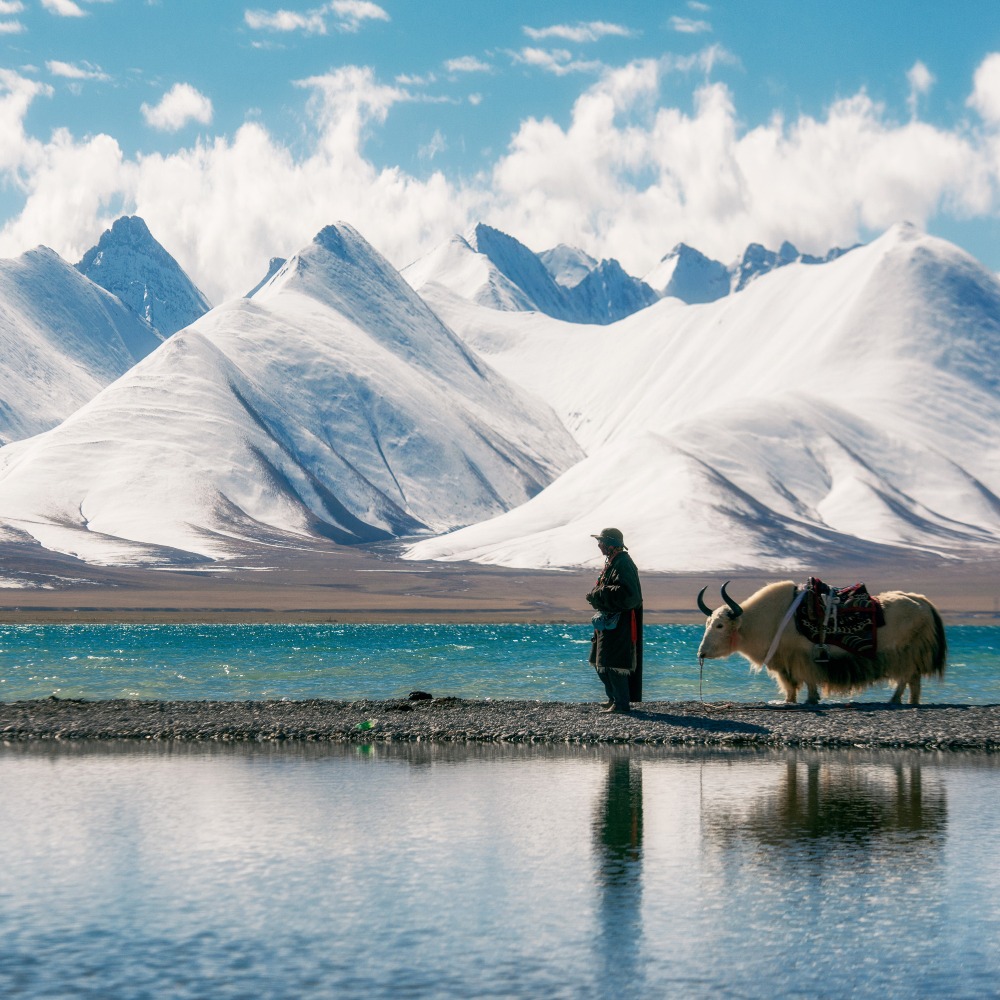
Early morning departure toward Lhachen La Pass (5,190 m), known as the “Great Pass of the Gods”, offering spectacular views over eroded valleys and extraordinary geological formations that create a near-surreal landscape. Arrival at Namtso Lake, the “Heavenly Lake,” revered for its high altitude and crystal-clear waters. It is one of the most sacred and visually stunning lakes in Tibet, as well as the largest saltwater lake in the region. Explore the Tashi Peninsula, a spiritual retreat known for its meditation caves, sacred rocks, and mythical scenery. Along the way, discover lungta (prayer flags) and stone cairns (chörtens) left by pilgrims. If circumstances allow, visit Tibetan nomads living in yak-hair tents on the high pastures between Namtso and the Nyenchen Tanglha Mountains. Return to Lhasa in the late afternoon.
Early morning departure toward Lhachen La Pass (5,190 m), known as the “Great Pass of the Gods”, offering spectacular views over eroded valleys and extraordinary geological formations that create a near-surreal landscape. Arrival at Namtso Lake, the “Heavenly Lake,” revered for its high altitude and crystal-clear waters. It is one of the most sacred and visually stunning lakes in Tibet, as well as the largest saltwater lake in the region. Explore the Tashi Peninsula, a spiritual retreat known for its meditation caves, sacred rocks, and mythical scenery. Along the way, discover lungta (prayer flags) and stone cairns (chörtens) left by pilgrims. If circumstances allow, visit Tibetan nomads living in yak-hair tents on the high pastures between Namtso and the Nyenchen Tanglha Mountains. Return to Lhasa in the late afternoon.
Day 12 Lhasa → Chengdu
Flight to Chengdu. Visit Qingyang Taoist Temple, one of the most important Taoist temples in China. In the evening, enjoy a traditional Sichuan hotpot dinner, followed by a Sichuan Opera performance featuring the famous face-changing (Bian Lian) art.Day 13 Chengdu
Morning visit to the Giant Panda Research and Breeding Center, home to around fifty giant pandas and red pandas. Drive to the Sanxingdui Archaeological Site, one of the most fascinating discoveries in Chinese archaeology, revealing a mysterious civilization that flourished between 2800 and 800 BCE, distinct from the Shang Dynasty. Transfer to Chengdu Airport.
Morning visit to the Giant Panda Research and Breeding Center, home to around fifty giant pandas and red pandas. Drive to the Sanxingdui Archaeological Site, one of the most fascinating discoveries in Chinese archaeology, revealing a mysterious civilization that flourished between 2800 and 800 BCE, distinct from the Shang Dynasty. Transfer to Chengdu Airport.