Why Does Zhangjiajie Captivate the World Today?
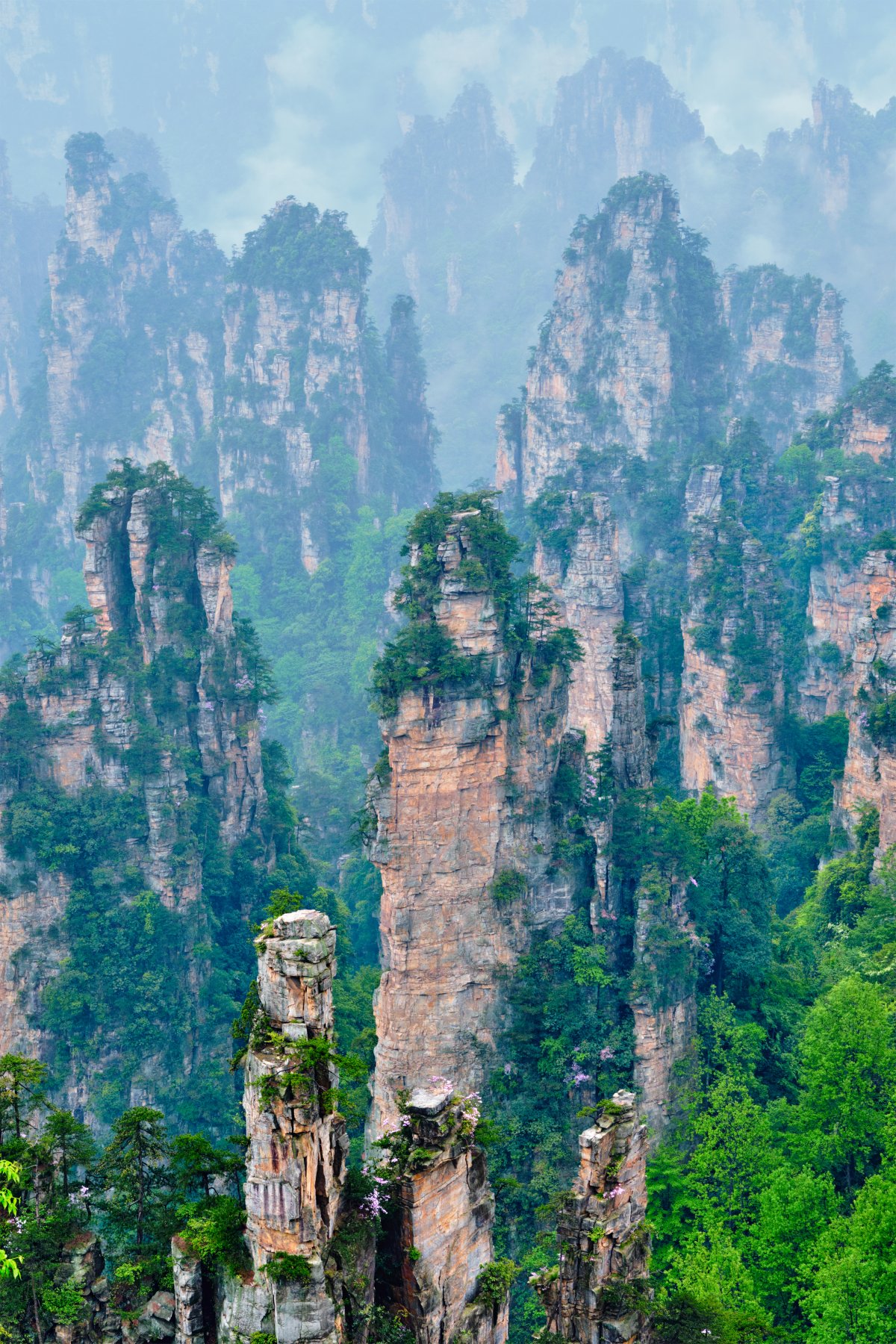
In recent years, one name has been echoing more and more across international media: Zhangjiajie. Located in Hunan Province, in the heart of central China, this region has become a global icon thanks to its spectacular sandstone pillars—often wrapped in mist—that seem to float between earth and sky. Popularized as the inspiration for the “Avatar Mountains” after James Cameron’s film, Zhangjiajie now fascinates travelers, filmmakers, and photographers from around the world.
Yet reducing Zhangjiajie to a mere visual spectacle would be unfair. This is a land where nature reaches rare intensity, where geology tells a story millions of years in the making, and where the culture of local ethnic minorities—particularly the Tujia people—adds a deeply human dimension to the journey. Today, New Tour invites you to explore this Chinese gem in depth and discover why Zhangjiajie truly deserves a place in your future travel itineraries.
CHINESE NEW YEAR 2026
A Geological Landscape Unlike Any Other
Zhangjiajie National Forest Park, a UNESCO World Heritage Site since 1992, is renowned for its nearly 3,000 towering quartz-sandstone pillars, some rising more than 200 meters high. Sculpted by erosion and time, these formations resemble vast stone forests soaring toward the sky.
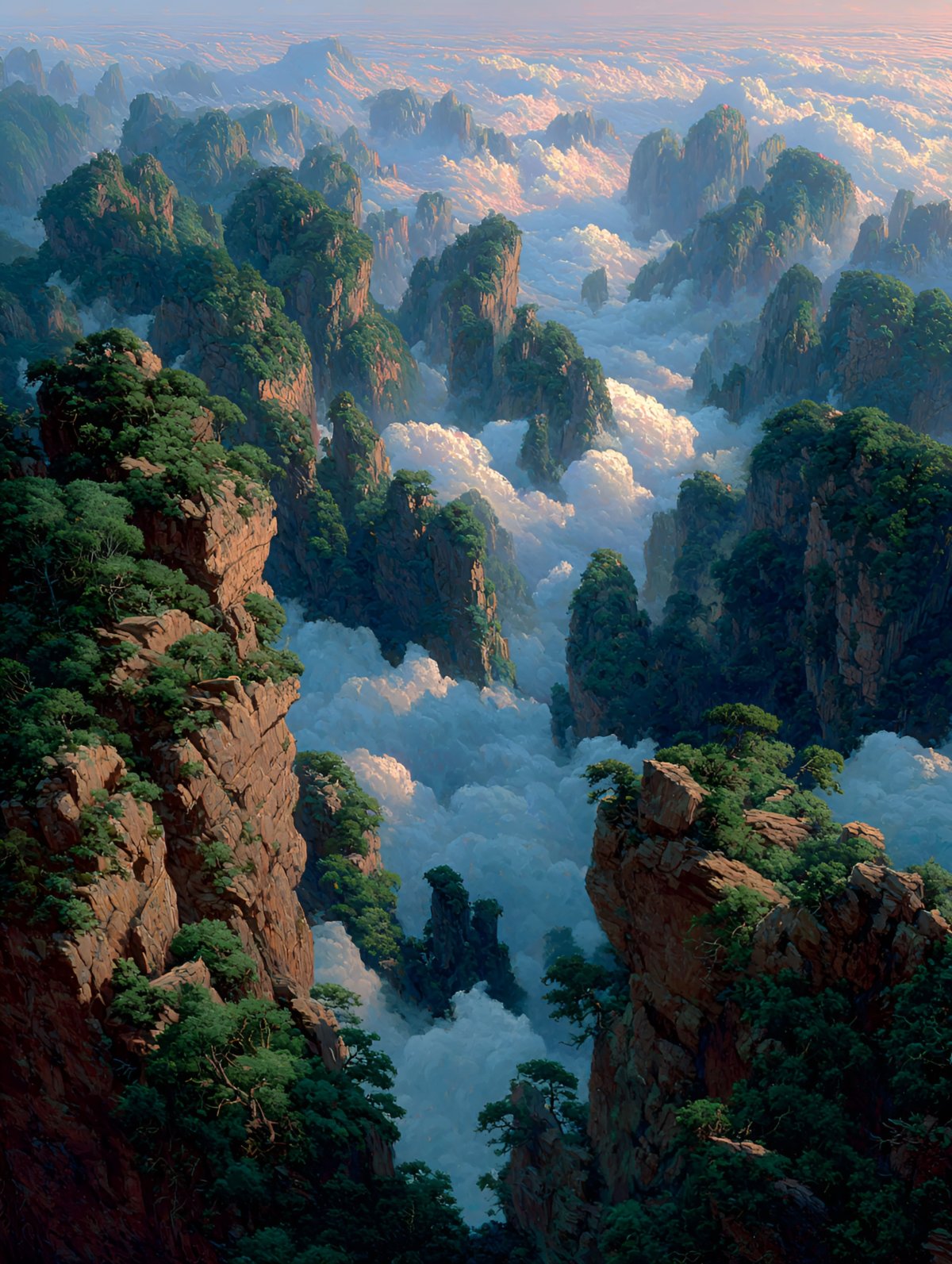
This landscape is truly unparalleled—found neither in the Dolomites nor in the canyons of the American West. Here, erosion has carved the rock into countless slender columns, separated by deep gorges where crystal-clear rivers flow. When mist drifts through the valleys, the pillars appear to float in midair, creating a mystical atmosphere that inspired the floating mountains in James Cameron’s Avatar.
The most iconic site, Hallelujah Mountain, was officially renamed following the film’s success, further enhancing its global fame. Yet beyond its cinematic reference, Zhangjiajie remains above all a breathtaking lesson in geology and natural poetry.
An Encounter with Local Culture
Zhangjiajie is not only a natural wonder—it is also a land shaped by centuries of human presence. The region is home to the Tujia ethnic minority, renowned for its rich traditions, wooden stilt architecture, and haunting polyphonic songs.
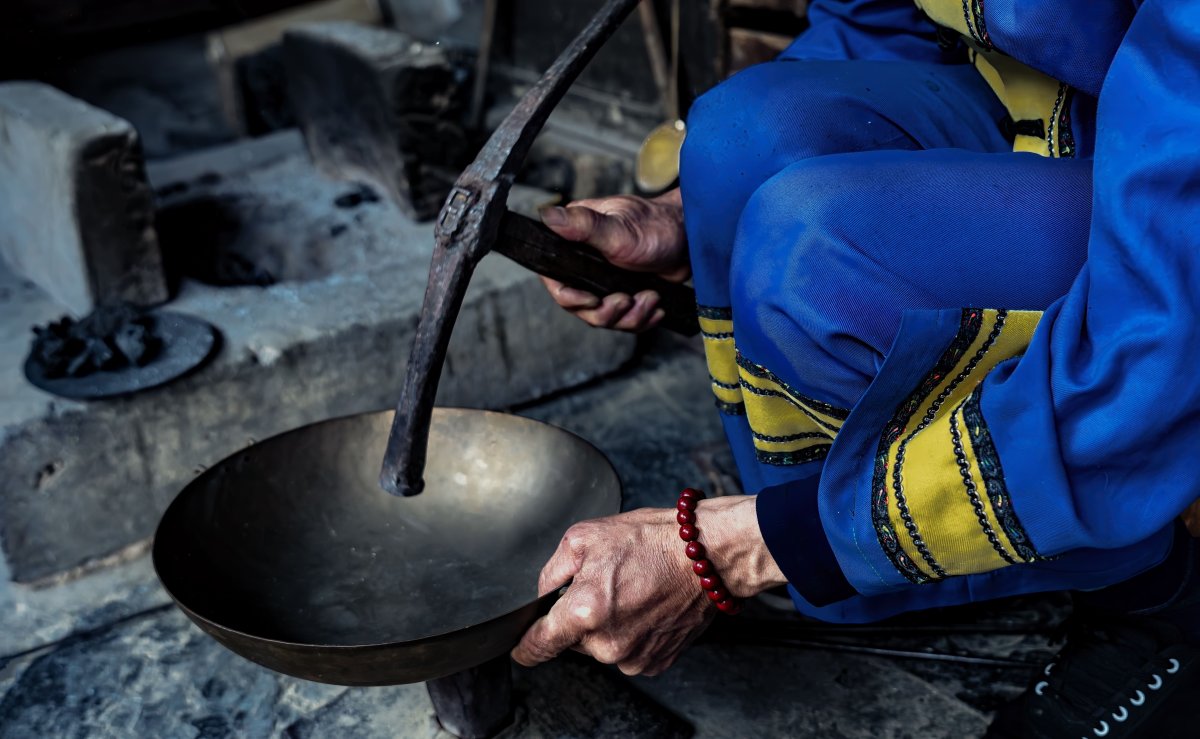
In the surrounding villages, houses built on stilts reflect a way of life perfectly adapted to the steep terrain. Visitors can discover vibrant traditional costumes, intricately embroidered, as well as communal dances still performed during local festivals.
Regional cuisine is another highlight: bold Hunan flavors infused with chili, dishes made from corn or glutinous rice, and forest specialties such as wild mushrooms. Cultural performances like the famous “Charming Xiangxi” show bring Tujia legends and music to life in a spectacular theatrical setting, offering a deeply immersive glimpse into local heritage.
CHINESE NEW YEAR 2026
When Is the Best Time to Visit Zhangjiajie?
Our recommendation: choose spring (April–May) or autumn (September–October) to enjoy mild weather and the region’s most beautiful scenery, while avoiding major Chinese holiday periods (May 1st and the first week of October).
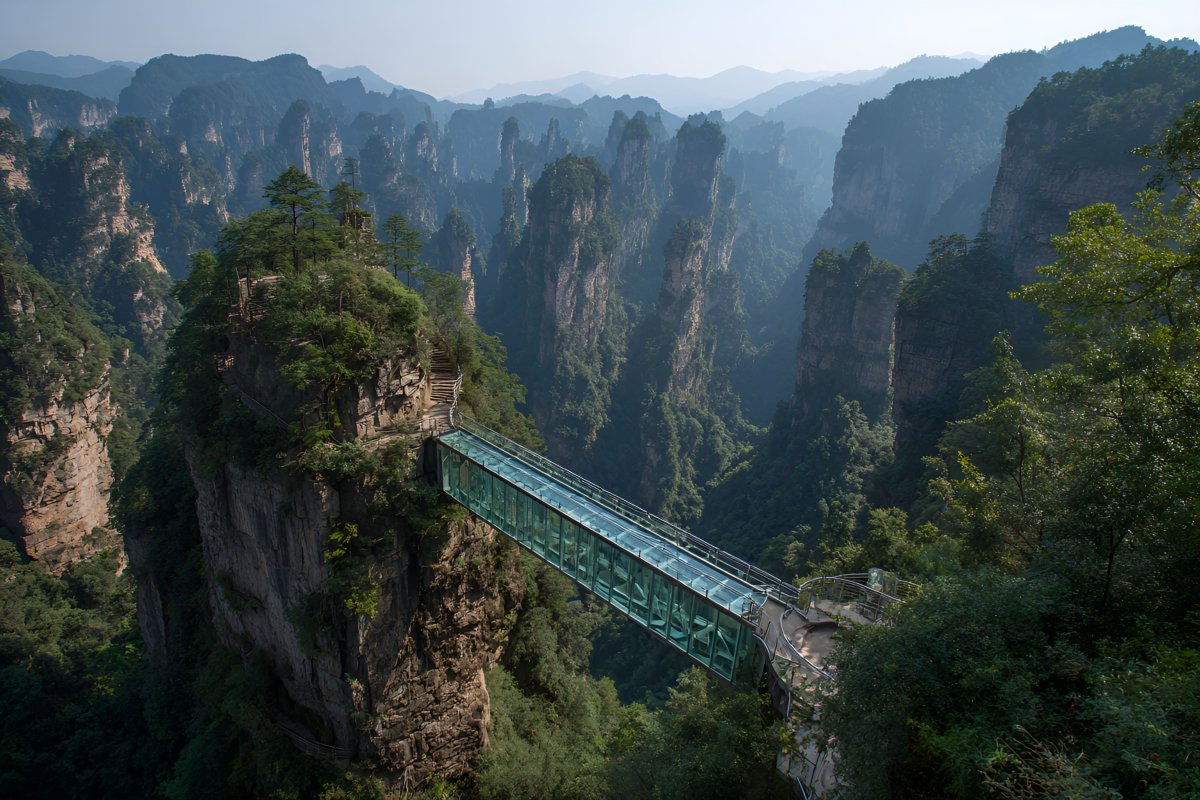
Zhangjiajie is not an ordinary destination. It is a place where nature defies imagination, where humans have mastered vertical landscapes with elevators and skywalks, and where local culture adds a deeply human dimension to the contemplation of its dramatic scenery.
In 2026, New Tour will offer exclusive itineraries featuring Zhangjiajie, designed to let you experience this extraordinary site in the best possible conditions. Contact us today to stay informed about our 2026 departures and be among the first to discover Zhangjiajie with our French-speaking tours.