
Between the Avatar Mountains and Guizhou’s hidden villages, a unique exotic journey
An exceptional journey blending spectacular natural scenery, cultural experiences, and meaningful human encounters. You will discover the floating forests and celestial Hallelujah Mountains of Zhangjiajie, the endless terraced rice fields of Mount Leishan, and the breathtaking landscapes of Libo’s karst park.
Beyond these remarkable sites, the journey offers a deep human immersion through folkloric performances, shared meals with villagers, traditional craft workshops, and encounters with local guardians of memory—where you will experience the rare practice of Shui script writing, a cultural heritage now facing extinction.
Day 1 Chongqing
Arrival in Chongqing and welcome by your French-speaking guide. Transfer to the hotel for breakfast and rest. Visit Chongqing, the largest city in southwest China, famous for its hillside skyscrapers, urban cable cars, and futuristic, “cyberpunk-style” architecture. Walk through Huangjueping, the famous graffiti street decorated with colorful murals created by students and local and international artists. Discover the historic Jiaotong Tea House, which has preserved the atmosphere of the 1970s–80s, the Tielusicun district with graffiti-covered buildings along former railway lines awaiting demolition—an emblematic reflection of the old city—and the Junge Bookstore, set inside a former air-raid shelter.
Day 2 Chongqing → Zhangjiajie
Transfer to the railway station and travel to Zhangjiajie by express train. Enjoy scenic views along the way. Packed lunch provided.
Arrival in the early afternoon in Zhangjiajie, one of China’s most iconic national parks, famous for its vertical sandstone peaks and misty landscapes, known worldwide through the film Avatar. Hotel check-in and free time to explore the city.
Day 3 Zhangjiajie → Yuanjiajie
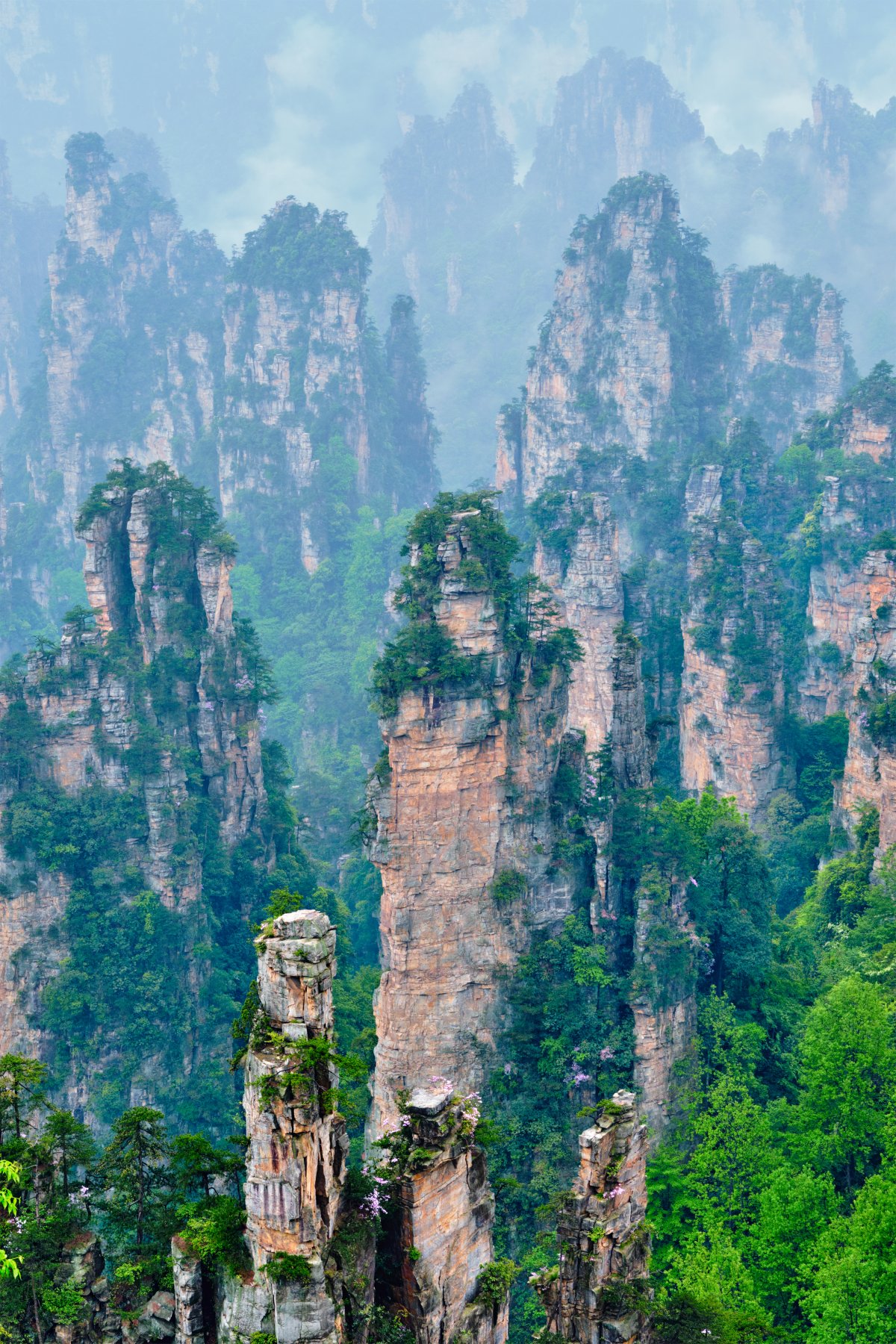
Visit Yuanjiajie, part of Zhangjiajie National Forest Park (UNESCO), renowned for its spectacular quartzite pillars rising hundreds of meters above the forest. These extraordinary landscapes inspired the Hallelujah Mountains in James Cameron’s Avatar. Ascend via the Bailong Glass Elevator, a panoramic lift climbing 326 meters up a cliff. Discover the Sky Bridge and the Southern Sky Pillar. Continue to Tianzishan (Mount of the Son of Heaven) in the Wulingyuan Scenic Area (UNESCO), famous for its mystical, mist-covered peaks and stone columns resembling forests suspended in the sky (ascent by lift). End the day with a gentle walk along Golden Whip Stream (Jinbianxi), one of the most peaceful and poetic areas of Zhangjiajie.
Day 4 Zhangjiajie → Baofeng Lake
Boat cruise on Baofeng Lake, surrounded by steep cliffs, lush forests, and karst peaks. Visit the Grand Canyon, a geological marvel combining vertiginous cliffs, crystal-clear rivers, waterfalls, caves, and subtropical forests. Experience the thrilling Glass Bridge, the world’s longest (430 m) and highest (300 m) glass bridge, offering breathtaking views as you walk above the canyon.
Day 5 Zhangjiajie → Tianmen Mountain → Fenghuang
Ride the world’s longest cable car (7,455 m) to Tianmen Mountain, the “Mountain of Heaven’s Gate,” famed for its dramatic geology, vertiginous cliff paths, and immense natural arch resembling a gateway to the sky. Discover the 99 Bends Road, the 999-step Heavenly Stairway, Heaven’s Gate, and the Guigu Hanging Walkway, clinging to sheer cliffs with stunning valley views. Travel by coach to Fenghuang (Phoenix Town), founded during the Ming dynasty, set along the Tuo River and surrounded by green hills. Evening walk through the old town to admire its Han, Tujia, and Miao architecture, cobbled streets, stilt houses, ancient gates, and ramparts.
Day 6 Fenghuang → Tongren → Kaili Boat ride on the river. Discover the North Gate of the old city walls, the Longevity Palace, and the Pagoda of Ten Thousand Names. Transfer by coach to Tongren railway station and train to Kaili, capital of the Miao region. Visit a Miao family in Qingman Village, where women’s clothing is hand-embroidered and adorned with silver jewelry. Welcome ceremony and dinner with the host family, offering a true immersion into local life. Overnight in Kaili.
Day 7 Kaili → Leishan → Rongjiang (Miao villages)
Visit Langde Miao Village, where villagers welcome you with the traditional “barrier wine” ceremony, featuring local rice wine. Enjoy performances of songs and dances by villagers dressed in richly embroidered festive costumes adorned with hand-crafted silver. In the afternoon, visit Wudong Village, known for its cultural authenticity and wooden stilt houses built along the hillside. This village is a living conservatory of Miao traditions, where ancestral customs endure, including the use of water-powered grain mills operating for over 200 years. Overnight in Rongjiang.
Day 8 Rongjiang → Zhaoxing (Dong people)
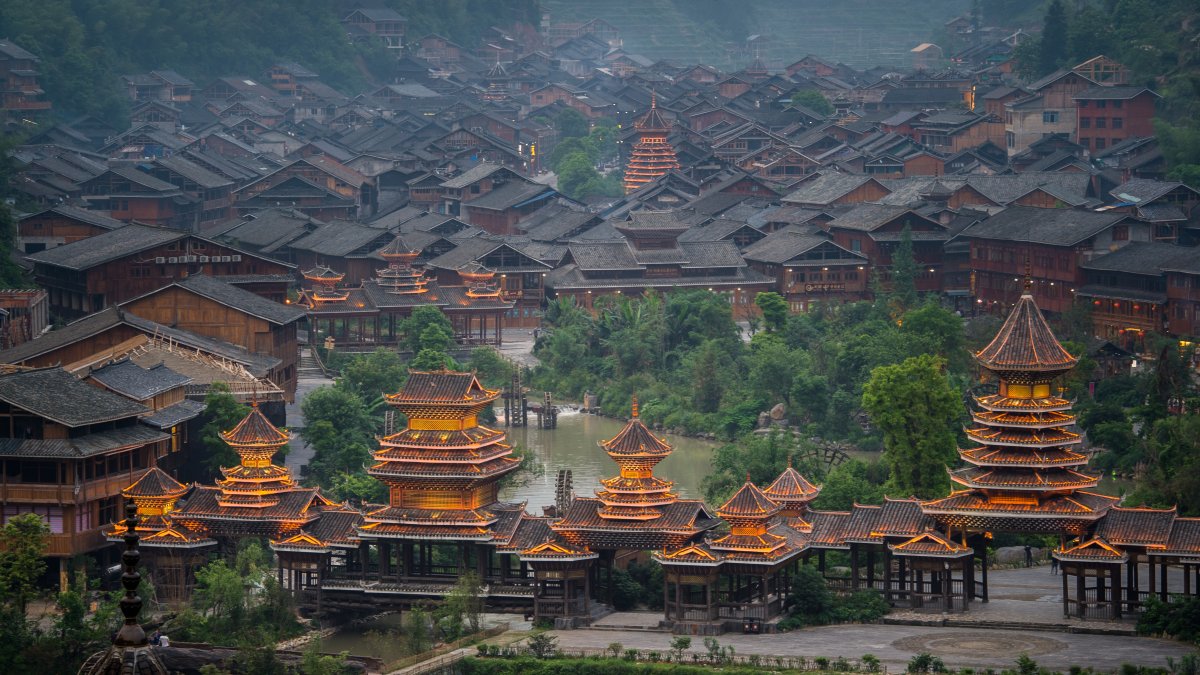
Explore the lively local market and the old quarter of Rongjiang. Travel to Zhaoxing, one of China’s most beautiful villages, home to the Dong ethnic group, known as the “Sea of Songs.” The Dong polyphonic choir tradition is listed as UNESCO Intangible Cultural Heritage. Walk through Zhaoxing to discover its five Drum Towers, Wind and Rain Bridges, and open-air theaters reflecting daily village life. Optional evening Dong song and dance performance.
Day 9 Zhaoxing → Huanggang → Libo (Dong villages)
Visit Tang’an Village, perched on a mountainside with sweeping views over terraced rice fields and pine forests. Optional hike along the rice terrace paths to observe traditional rural life and sustainable farming practices. Continue to Huanggang Dong Village, distinguished by the purity of its Dong culture, preserved through geographic isolation. Villagers still wear traditional clothing in daily life. Overnight in Libo, famous for its spectacular karst landscapes, exceptional biodiversity, and the multiethnic cultures of the Buyi, Miao, and Shui peoples.
Day 10 Libo Xiaoqikong and Daqikong National Parks
Explore Libo Karst, part of the South China Karst UNESCO World Heritage site. Visit Xiaoqikong Scenic Area (“Seven Small Arches”), one of China’s most enchanting natural wonders, celebrated for its biodiversity and crystal-clear waters. The Xiangshui River flows through a primeval forest of vines and roots, cascading through karst formations in waterfalls and gentle streams. Visit Daqikong Scenic Area (“Seven Large Arches”), known for its monumental natural bridge, dramatic karst scenery, and mysterious atmosphere.
Day 11 Libo → Sandu → Qingyan
Travel to Sandu to visit the Shui Intangible Cultural Heritage Center, a living bridge between tradition and modernity. Participate in an interactive workshop with local artisans: discover Shui craftsmanship, practice the endangered Shui script calligraphy, and learn about unique horsehair embroidery. Continue to Qingyan, a fortified town founded in the 14th century during the Ming dynasty. Discover massive stone walls, cobbled streets, wooden houses, and traditional temples. Free time in Guiyang, capital of Guizhou Province.
Day 12 Qingyan → Guiyang → Chongqing (High-Speed Train)
High-speed train from Guiyang to Chongqing. Visit Huguang Guild Hall, built in 1759, renowned for its refined southern Chinese architecture, intricate wood carvings, glazed tiles, and courtyard theaters. Free time for a walk in Chongqing.
Day 13 Chongqing → Dazu → Chongqing
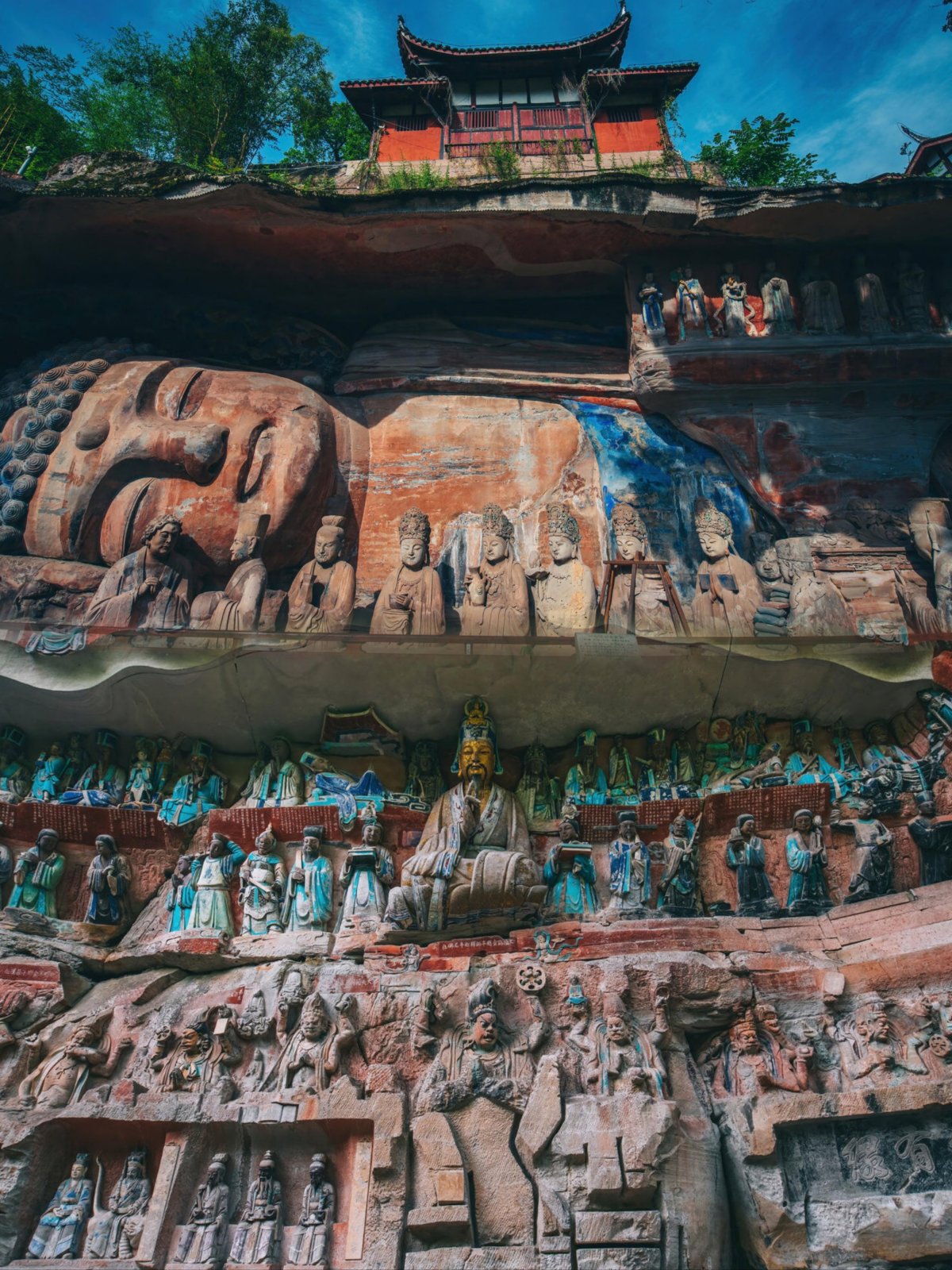
Travel to Dazu, famous for its Buddhist rock carvings (UNESCO). Visit the renowned Baoding Mountain Grottoes, featuring 31 groups of Buddhist, Taoist, and Confucian sculptures dating from the 9th to 13th centuries, masterpieces of Song dynasty stone carving. Return to Chongqing. Visit Liziba Metro Station, one of the world’s rare metro stations built directly through a 19-story residential building. Explore Hongyadong, an 11-level cliffside complex combining traditional architecture with shops, restaurants, tea houses, inns, and panoramic bars. Enjoy stunning night views of the mountain city. Transfer to the airport in the evening. Overnight on board.